
Interpreting
Conference interpreting services
Oral translation (or interpreting) predates written translation and has served as a means of mediation in various communicative situations throughout history. Since then, several sub-categories have emerged within conference interpreting, each with its own characteristics and specific features, but all with the same aim: to break down the language barrier.
Let’s first look at the different sub-categories to find out what type of interpreting you require.
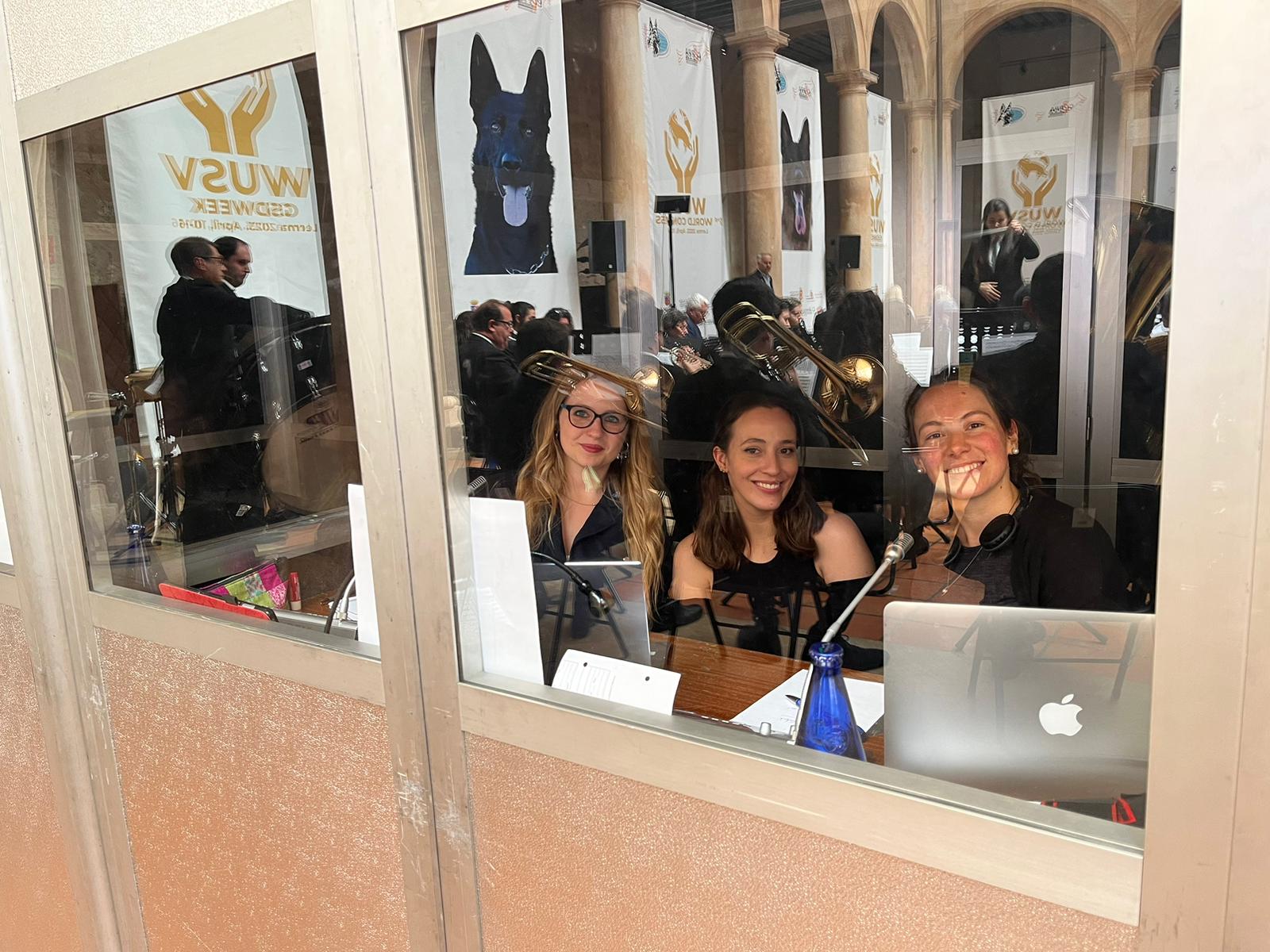
Types of interpreting
Interpreting is an essential tool for ensuring effective communication in multilingual contexts. There are different types of interpreting, each tailored to specific needs, such as conferences, business meetings, medical or legal events. Whether consecutive, simultaneous, whispered (chuchotage) or remote, each mode requires unique skills to convey the message accurately and fluently in real time. Find out which type of interpreting is best suited to your project and ensure barrier-free communication.
Simultaneous interpreting
Large meetings
Events with a large number of participants where interpreting is required in more than one language.
Consecutive interpreting
Small meetings
Events with a moderate number of participants, where interpreting is provided into a single language.
Simultaneous interpreting
In this type of interpreting, the interpreter conveys the speaker’s original message into another language at the same time. In other words, whilst the speaker is speaking in language X, the interpreter conveys everything the speaker says into language Y.
This form of interpreting is ideal for international conferences, seminars, press conferences and general meetings, amongst others. Given the enormous cognitive effort required for simultaneous interpreting, it is worth noting that, for events lasting longer than one hour, it will be necessary to hire two interpreters who can take turns.


Consecutive interpreting
In this form of conference interpreting, the speaker talks for several minutes whilst the interpreter takes notes of everything the speaker says in a notebook, in order to reproduce the content in another language once the speaker has finished speaking.
Unlike simultaneous interpreting, this form of interpreting does not require specialised technical equipment, as the interpreter is usually positioned next to the speaker and only needs a microphone.
Bilateral interpreting
Liaison interpreting (or bilateral interpreting) involves interpreting in the same way as in consecutive interpreting, except that, rather than interpreting into a single language, the interpreter interprets into two languages.
Bilateral or liaison interpreting is most commonly used in small meetings, such as a business dinner with a foreign partner, an appointment with a notary abroad, or a visit to a company’s premises.
The interpreter will translate both what you wish to say to your partner and what your partner wishes to say to you.


Remote interpreting
As we’ve already mentioned, all types of conference interpreting are now available online. Meet with your partners, deliver online courses, organise webinars and make them multilingual.
I’ll provide the platform, the organisation and the voice, so that you can focus solely on your content.
Haven’t requested a quote yet? What are you waiting for?
Get in touch and I’ll answer all your questions
If you need professional translation or interpreting services, I’m here to help. No matter the size or complexity of your project, I’ll work with you to ensure high-quality results that exceed your expectations.
📩 Get in touch and let’s start working together.